





















Your liver is one of the hardest-working organs in the body. It helps filter toxins, store energy, support digestion, regulate metabolism, and protect your immune system. Yet for something so vital, many people don’t pay attention to warning signs that it may be struggling — until it’s too late.
Recognizing early symptoms of liver stress can help you take action before serious damage occurs. In this article, we’ll explore the 8 warning signs your liver is struggling, what they mean, and how to protect this essential organ.
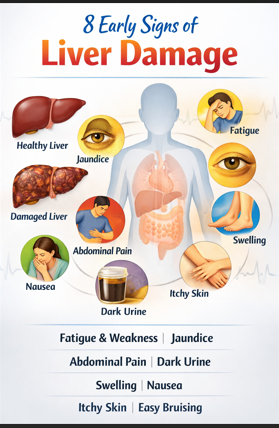
1. Persistent Fatigue and Weakness
Feeling tired sometimes is normal — but persistent fatigue that doesn’t improve with rest could signal liver stress.
Why it happens:
The liver plays a key role in energy production by processing nutrients into usable fuel. When it’s not functioning properly:
-
Energy production slows down.
-
Toxins build up in the blood.
-
You may feel constantly tired, weak, or unable to concentrate.
This isn’t just occasional tiredness — it’s a persistent lack of energy that affects daily life.
Tip: If fatigue doesn’t go away after good sleep and balanced nutrition, mention it to your doctor.
2. Yellow Skin or Eyes (Jaundice)
One of the most recognizable signs of a struggling liver is jaundice — a yellowing of the skin and the whites of the eyes.
What causes it:
The liver normally removes bilirubin — a waste product from red blood cell breakdown. If the liver can’t process bilirubin effectively, it builds up and causes that yellow tint.
You might also notice:
-
Dark urine
-
Pale or clay-colored stools
If you see yellowing of the skin or eyes, seek medical attention promptly.
3. Digestive Issues and Abdominal Discomfort
Your liver helps produce bile, which breaks down fats during digestion. When liver function declines, digestion can suffer.
Common symptoms include:
-
Bloating
-
Gas
-
Stomach discomfort, especially in the upper right abdomen
-
Feeling full quickly after eating
These symptoms may feel mild at first, but if they happen often or worsen, they could be linked to liver stress.
4. Dark Urine or Light-Colored Stools
Changes in urine and stool color can be important signs of liver or bile duct problems.
What to watch for:
-
Dark urine that looks like tea — a sign of excess bilirubin.
-
Pale or clay-colored stools — a sign that bile isn’t reaching the intestines properly.
Healthy liver function usually keeps urine light and stools brown. Any changes that persist deserve evaluation.
5. Unexplained Weight Changes
Your liver plays a role in regulating metabolism and storing nutrients. When it’s struggling, you may notice sudden or unexplained changes in weight.
Possible patterns:
-
Unintended weight loss: Poor nutrient processing can reduce appetite and absorption.
-
Fluid-related weight gain: When proteins like albumin decrease, fluid may accumulate in tissues or the abdomen.
Sudden weight shifts without lifestyle changes should be discussed with a healthcare provider.
6. Swelling in Legs, Ankles, or Abdomen
Swelling (edema) in the legs, ankles, or abdomen can be caused by fluid buildup — a common result of weakened liver function.
Why swelling happens:
-
The liver produces proteins that help maintain fluid balance in the body.
-
When production drops, fluid can leak into surrounding tissues.
You might notice:
-
Tight shoes or socks by the end of the day
-
A swollen, bloated belly
-
Persistent puffiness around limbs
Swelling that doesn’t go away with rest or elevation needs medical evaluation.
7. Itchy Skin Without Rash
Itchy skin that doesn’t appear to be caused by a rash, allergy, or dryness can actually be a warning sign of liver stress.
What’s happening:
When bile acids build up in the bloodstream because the liver isn’t processing them properly, they can irritate nerves in the skin.
Signs of liver-related itching:
-
Persistent itch without visible rash
-
Worse at night
-
Doesn’t improve with lotions
If your skin itches for no clear reason, it’s worth mentioning to a doctor.
8. Easy Bruising and Bleeding
Your liver helps produce clotting factors — proteins that help your blood clot after cuts or injuries.
What to look for:
-
Bruises after mild pressure
-
Bleeding that takes longer to stop
-
Frequent nosebleeds or gum bleeding
If your body seems to bruise or bleed more easily than before, especially without injury, it might mean the liver isn’t making enough clotting proteins.
When Should You See a Doctor?
Some of these symptoms may be subtle or linked to other causes. But when you notice multiple signs occurring together — especially over a period of weeks — it’s wise to seek medical advice.
Your doctor can:
-
Order liver enzyme tests
-
Recommend imaging scans (like ultrasound)
-
Evaluate your overall health and lifestyle
-
Suggest diet or lifestyle changes
Early detection and intervention can significantly improve outcomes.
Tips to Support a Healthy Liver
Your liver has a remarkable ability to heal — especially when you support it with healthy habits. Here are practical steps to protect your liver:
1. Eat Nutrient-Rich Foods
Focus on vegetables, fruits, lean proteins, whole grains, and healthy fats.
2. Limit Added Sugars and Processed Foods
High sugar intake and ultra-processed meals can contribute to fat accumulation and inflammation.
3. Be Mindful of Alcohol Intake
Too much alcohol increases stress on the liver. Moderation or avoidance can make a big difference.
4. Stay Hydrated
Water supports digestion, nutrient absorption, and toxin removal.
5. Move Your Body
Regular physical activity supports metabolism and can help prevent fatty liver buildup.
6. Check Medications
Some over-the-counter medicines can be hard on the liver if overused. Always follow dosing instructions and consult a healthcare professional if you’re unsure.
Final Thoughts
Your liver works hard every single day, and it doesn’t always give loud warnings when something is wrong. The 8 warning signs above — from fatigue and jaundice to itching and swelling — are your body’s way of saying it’s time to pay attention.
Listen to your body, practice healthy habits, and don’t ignore persistent symptoms. Your liver plays a central role in total-body wellness — and protecting it is one of the best investments you can make for long-term health.






Discussion about this post