































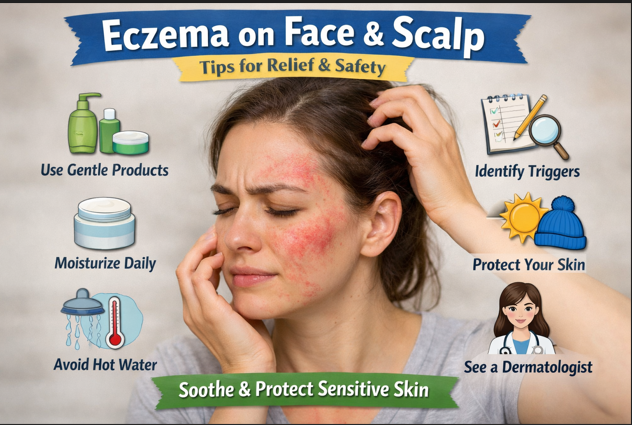
Eczema (also called atopic dermatitis) is a common skin condition that causes itchy, dry, red, or inflamed skin. While it can occur anywhere on the body, eczema on the face and scalp often feels more visible and sensitive — and that can be especially frustrating. If you’re dealing with facial or scalp eczema, you’re not alone. This article explains what it is, why it happens, and safe, practical strategies to manage it and protect your skin.
1. What Is Eczema? (Quick Overview)
Eczema isn’t a contagious infection — you can’t catch it from someone else. It happens when the skin’s protective barrier weakens and becomes more sensitive to irritants and dryness. This can lead to:
-
Redness or patches
-
Intense itching
-
Flaky or scaly skin
-
Small bumps or dry cracks
When eczema appears on the face or scalp, it may feel more uncomfortable because these areas are exposed to sunlight, hair products, weather changes, and daily washing.
2. Causes & Triggers: Why It Happens on Face & Scalp
Eczema doesn’t have a single cause, but a mix of factors can trigger or worsen it:
1. Dry Skin
The skin on your face and scalp can lose moisture easily — especially in cold, dry climates — causing irritation.
2. Harsh Products
Soaps, shampoos, styling gels, and facial cleansers that contain fragrance, alcohol, or sulfates can trigger flare-ups.
3. Allergens & Irritants
Dust, pollen, pet dander, and even some metals (like nickel in jewelry) might make symptoms worse.
4. Stress & Hormones
Stress, lack of sleep, and changes in hormones (like during puberty) can increase flare-ups.
5. Heat & Sweat
Sweat and friction (like from hats, headbands, or glasses) can irritate sensitive skin.
Understanding your triggers helps prevent future flare-ups and keeps your skin calmer.
3. Safe & Effective Tips to Manage Eczema on Face and Scalp
Here are trusted, practical tips you can start using today:
1. Use Gentle, Fragrance-Free Cleansers
Harsh soaps strip natural oils from the skin, making dryness and irritation worse.
-
Choose mild, fragrance-free face washes and scalp cleansers.
-
Avoid products with strong perfumes, sulfates, or alcohol.
-
Wash gently — don’t use rough washcloths or scrub your skin.
Tip: Cleanse once or twice a day (especially after sweating), but avoid over-washing.
2. Moisturize Daily (Especially After Washing)
Moisturizing is one of the most important steps in soothing eczema.
-
Use thick, fragrance-free moisturizers or ointments.
-
Apply right after washing your face or showering.
-
For face eczema, consider creams with ceramides — molecules that help repair the skin barrier.
For the scalp:
-
Choose scalp oils designed for sensitive skin, like coconut oil or jojoba oil, if your dermatologist approves.
-
Apply a thin layer before bed and wash gently in the morning.
3. Avoid Hot Water
Hot water can dry out your skin and worsen itching.
-
Use lukewarm water for washing your face and showering.
-
Keep showers short (5–10 minutes)
4. Watch What You Put on Your Hair
Hair products can run down and irritate the forehead, temples, or ears.
-
Use fragrance-free, sulfate-free shampoos/conditioners.
-
Rinse thoroughly so residue doesn’t stay on your skin.
-
If you use styling products, avoid letting them touch your face.
5. Protect Your Skin from Weather
Both sun and cold weather can trigger eczema:
-
In cold weather: wear a hat or scarf and use moisturizer before going outside.
-
In sunny weather: use a broad-spectrum sunscreen safe for sensitive skin (mineral sunscreens with zinc oxide are often recommended).
6. Avoid Scratching
Scratching makes eczema worse and can lead to infection.
-
Keep nails short and clean.
-
Try gentle tapping or applying a cool compress if it itches.
-
For nighttime itching, consider a light cotton glove while you sleep (ask an adult first).
7. Identify & Avoid Triggers
Make a small skin diary noting:
-
What products you used
-
What foods you ate
-
What weather conditions you were in
-
Any stress or lack of sleep
Over time, patterns can help you identify what makes your flare-ups worse.
8. Choose Comfortable Clothing & Gear
Buttons, headbands, hats, or helmets can rub the skin.
-
Wear soft, breathable fabrics (like cotton).
-
Avoid tight headwear that traps heat and sweat.
9. Manage Stress & Sleep Well
Your skin and immune system stay healthier when you:
-
Get enough sleep
-
Practice stress-reducing activities (like walking, journaling, or listening to music)
Stress doesn’t cause eczema, but it can trigger flare-ups.
10. Talk to a Dermatologist
If your eczema:
-
Doesn’t improve with gentle care
-
Itches intensely
-
Looks infected (pus, fever, severe redness)
A dermatologist may recommend safe treatments like prescription creams or medicated shampoos.
🩺 Important: Never try strong medications or steroid creams without a doctor’s guidance.
3. Common Myths About Eczema (Busted!)
1. Myth: Eczema is caused by poor hygiene.
2. Fact: Eczema is related to skin sensitivity and inflammation — washing too much can make it worse.
3. Myth: Only kids get eczema.
4. Fact: People of any age can have eczema, including teens and adults.
5. Myth: You must avoid all hair products.
6. Fact: You don’t have to stop everything — but choose gentle, fragrance-free products instead.
4.Daily Routine Sample for Face & Scalp Eczema
Here’s an example of a gentle routine:
Morning
-
Rinse face with lukewarm water
-
Apply fragrance-free moisturizer
-
Shampoo scalp with mild shampoo (if needed)
-
Apply sunscreen to face (if you’re going outdoors)
Evening
-
Wash face gently
-
Moisturize face and scalp
-
Apply soothing oil to scalp (if dry)
-
Relax and avoid touching skin
5. Foods & Eczema: Does Diet Matter?
Some people notice certain foods affect their eczema. Common triggers include:
-
Dairy
-
Eggs
-
Nuts
-
Soy
Keeping a simple food diary can help you notice if certain foods make your skin itchy. Always talk to a trusted adult or doctor before eliminating foods from your diet, especially if you’re still growing.
6. Final Thoughts: Be Patient & Kind to Your Skin
Eczema can feel frustrating, especially on the face or scalp, but with gentle care and the right routine, you can reduce itching, irritation, and flare-ups. Every person’s skin is different, so it might take time to find what works best for you.
Stay consistent, be gentle, and don’t be afraid to ask a dermatologist for help when things feel tough.









Discussion about this post