







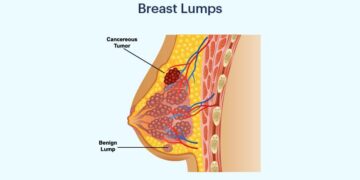



















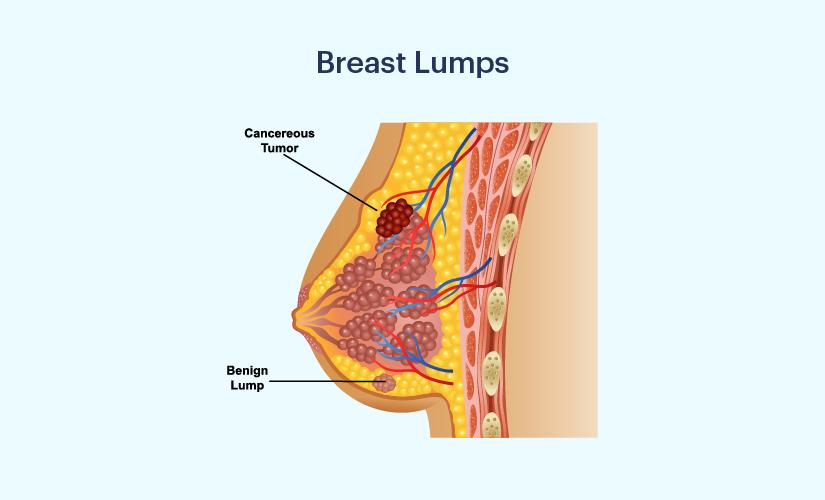
Finding a lump in the breast can be scary, but it is important to understand that most breast lumps are not cancerous. In fact, around 8 out of 10 breast lumps are benign (non-cancerous) and harmless.
A breast lump simply means a growth or swelling in the breast tissue that feels different from the surrounding area. These lumps can be soft, hard, painful, or painless, depending on the cause.
In this article, we will explain why breast lumps form, their common causes, symptoms, and when you should see a doctor.
What Is a Breast Lump?
A breast lump is a localized swelling, mass, or thickening in the breast. It can develop in:
- Breast tissue
- Underarm (near lymph nodes)
- Around the nipple area
Some lumps feel like a small pea, while others may feel larger or irregular.
Common Causes of Breast Lumps
There are many reasons why lumps form in the breast. These can be divided into non-cancerous (benign) and cancerous causes.
1. Hormonal Changes (Very Common)
Hormonal fluctuations during the menstrual cycle are one of the most common causes.
- Breasts may feel lumpy or swollen before periods
- Pain or tenderness may occur
- Lumps may disappear after the cycle
This condition is called fibrocystic breast changes and is completely normal.
2. Breast Cysts (Fluid-Filled Lumps)
Breast cysts are fluid-filled sacs inside the breast.
- Usually smooth and round
- Can feel soft or firm
- May become painful before periods
They are common in women aged 35–50 and are usually harmless.
3. Fibroadenoma (Non-Cancerous Tumor)
Fibroadenomas are solid, benign lumps that are:
- Smooth and rubbery
- Easily movable under the skin
- Common in young women
They are not cancer and usually do not need treatment.
4. Breast Infection (Mastitis or Abscess)
Infections can cause painful lumps, especially during breastfeeding.
Symptoms include:
- Redness
- Swelling
- Pain
- Fever
An abscess (pus-filled lump) may also form and needs medical treatment.
5. Injury or Fat Tissue Damage
Sometimes a lump forms after injury to the breast.
- Known as fat necrosis
- Feels like a hard lump
- Usually harmless
This can happen due to a blow, surgery, or trauma.
6. Lipoma (Fatty Lump)
A lipoma is a soft, slow-growing fatty lump.
- Feels doughy
- Moves easily
- Non-cancerous
These lumps usually do not require treatment.
7. Breast Cancer (Less Common but Serious)
Although less common, some breast lumps can be cancerous.
Signs of a cancerous lump:
- Hard and irregular shape
- Does not move easily
- Painless in many cases
- Skin changes (dimpling, redness)
- Nipple discharge or inversion
It is important to remember: not every lump is cancer, but every lump should be checked.
Symptoms Associated With Breast Lumps
You may notice:
- A new lump or thick area
- Pain or tenderness
- Change in breast size or shape
- Skin changes (redness, dimpling)
- Fluid discharge from nipple
Some lumps are painless, while others can be uncomfortable.
When Should You See a Doctor?
You should consult a doctor if:
- The lump lasts more than 2–4 weeks
- It grows in size
- It feels hard and fixed
- There is nipple discharge (especially blood)
- Skin changes appear
- A lump appears in the underarm
Early check-up helps rule out serious problems.
How Are Breast Lumps Diagnosed?
Doctors may use:
- Physical examination
- Ultrasound
- Mammography
- Biopsy (if needed)
These tests help identify whether the lump is benign or cancerous.
Can Breast Lumps Be Prevented?
Not all lumps can be prevented, but you can reduce risk by:
- Maintaining a healthy weight
- Exercising regularly
- Limiting alcohol
- Doing regular breast self-checks
- Going for routine health screenings
Final Thoughts
Breast lumps are common and often harmless. Most are caused by hormonal changes, cysts, or benign growths, not cancer. However, it is always important to take any new lump seriously and get it checked by a doctor.
Early detection can make a big difference in treatment and peace of mind.