






















Daily stress isn’t just something you feel emotionally — it has real, measurable effects on your circulatory system, including how blood flows through your arteries, veins, and capillaries. While short bursts of stress are normal, chronic stress (stress that lasts over weeks or months) alters fundamental body systems. In particular, it can disrupt blood flow, weaken vein function, and raise the risk of cardiovascular issues over time. Understanding this connection helps you take better care of your vascular health.
1. What Happens to Your Circulation When You’re Stressed
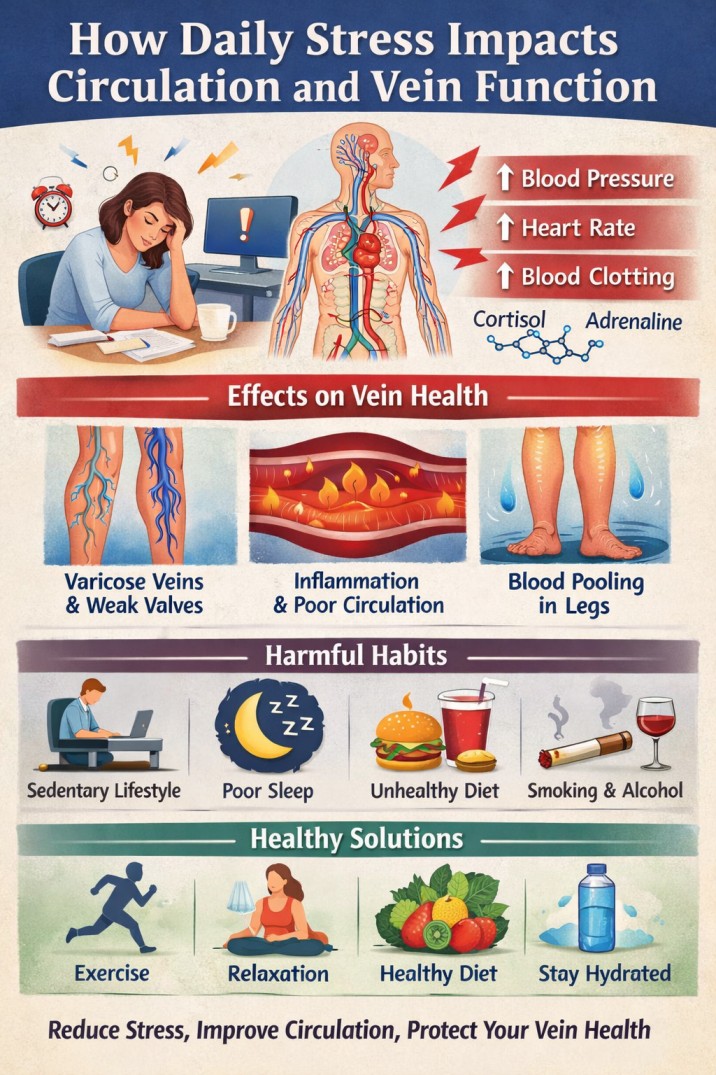
When your brain senses stress, it triggers a biological response known as the “fight or flight” reaction. This response releases stress hormones such as cortisol and adrenaline into your bloodstream. Immediate effects include:
-
Blood vessel constriction — Stress hormones make your blood vessels tighten. This causes higher blood pressure as your heart works harder to pump blood.
-
Increased heart rate — Your heart beats faster to supply muscles with oxygen-rich blood, which temporarily redirects blood flow from non-essential tissues.
-
Blood becomes thicker and stickier — Stress can increase clotting factors, which could make blood more likely to form clots.
In short bursts, these reactions help you deal with danger. But when stress is persistent — as it often is with work pressure, constant worry, poor sleep, or lifestyle demands — these changes interfere with healthy circulation over time.
2. Chronic Stress and Vein Health: The Hidden Connection
Your veins have an important job: they return blood back to the heart after it delivers oxygen to the body’s tissues. Healthy vein walls and valves ensure that blood flows steadily upward against gravity, especially in the legs. But stress can disrupt this in several ways:
Blood Pressure and Vein Pressure
Stress keeps stress hormones elevated, and this causes chronic vasoconstriction — constant narrowing of blood vessels. This makes the heart pump harder, raising overall blood pressure and putting more force on the vein walls. Over time, this can weaken the veins and their valves, contributing to problems such as varicose veins and venous insufficiency.
Inflammation and Vein Function
Persistent stress triggers inflammation within the vascular system. Inflammatory molecules can damage the inner lining of blood vessels (the endothelium), making them less flexible and more likely to malfunction. This reduces the ability of veins to expand and contract as needed for healthy blood flow.
Pooling of Blood in the Legs
Because stress can lead to sedentary behavior — such as sitting for long hours due to work demands — blood can pool in the lower legs. This increases pressure in the veins, contributing to swelling, heaviness, and visible vein changes over time.
3. How Stress Changes Your Circulatory Physiology
Here’s a deeper look at the physiological effects of chronic stress on circulation:
a) Endothelial Dysfunction
The endothelium is the delicate inner layer of blood vessels that helps regulate blood flow and vessel flexibility. Stress hormones and inflammation damage this layer, making blood vessels stiffer. Less flexibility means poorer circulation and greater strain on both arteries and veins.
b) Hormones and Heart Rate
In stressful moments, adrenaline and cortisol cause the heart to beat faster and blood vessels to narrow. Over time, this contributes to hypertension (high blood pressure). High blood pressure is a major risk factor for both cardiovascular disease and chronic vein disorders.
c) Increased Blood Clotting Risk
Stress increases clotting potential in your blood. While this can be helpful for healing after injuries, chronically elevated clotting risk can make circulation less efficient and raise the risk of venous thrombosis (dangerous clots in deep veins).
4. Everyday Stress Behaviors That Harm Circulation
It’s not just hormones — stress changes the way you live, and these habits can harm vein health too:
Prolonged Sitting
Office jobs, long commutes, and low physical activity reduce movement in leg muscles that help pump blood back to the heart. This causes pooling and pressure in the veins.
Poor Sleep
Stress often disrupts sleep, and sleep is when the body repairs tissues and restores balance. Lack of sleep means blood vessels can’t recover from daily stress, keeping inflammation and vascular tension high.
Unhealthy Eating and Weight Gain
Stress may lead to emotional eating, cravings for high-salt or high-fat foods, and weight gain. Excess body weight puts extra pressure on veins, especially in the legs, making circulation less efficient.
Smoking and Alcohol
Under stress, some people smoke or drink more. Smoking damages blood vessels directly, and alcohol affects blood pressure — both worsening circulation.
5. Positive Habits That Protect Circulation and Vein Function
Good news: there are many ways to counteract stress-related vascular strain.
Movement and Exercise
Regular physical activity boosts blood flow throughout the body. Even brisk walking 30 minutes most days can make veins stronger, promote arterial flexibility, and improve overall circulation.
Stress-Reduction Techniques
Practices like deep breathing, meditation, and yoga reduce stress hormones and encourage blood vessels to relax, lowering blood pressure and improving circulation.
Healthy Diet
Foods rich in antioxidants (like leafy greens, beets, and citrus fruits) help support nitric oxide production, a molecule that keeps blood vessels flexible and healthy.
Hydration
Drinking enough water helps maintain healthy blood volume and prevents blood from thickening, making it easier for veins to transport blood.
Breaks From Sitting
If you sit for long hours, stand up and move every hour. Even short walks or leg stretches can prevent blood pooling in the veins.
6. Final Thoughts: Stress Is Part of Life, but Its Effects Don’t Have to Be Permanent
Daily stress affects more than your mood. It changes the way your heart, blood vessels, and veins function — especially when stress becomes a long-term pattern. By understanding how stress impacts circulation, you can take steps early to protect your vascular system and maintain healthy blood flow for years to come.
Using stress management techniques, establishing healthy habits, staying active, and caring for your overall wellness are key parts of preventing stress-related circulatory problems. When stress is managed effectively, your veins and circulation can stay strong and flexible — supporting your long-term health and quality of life.







Discussion about this post