




































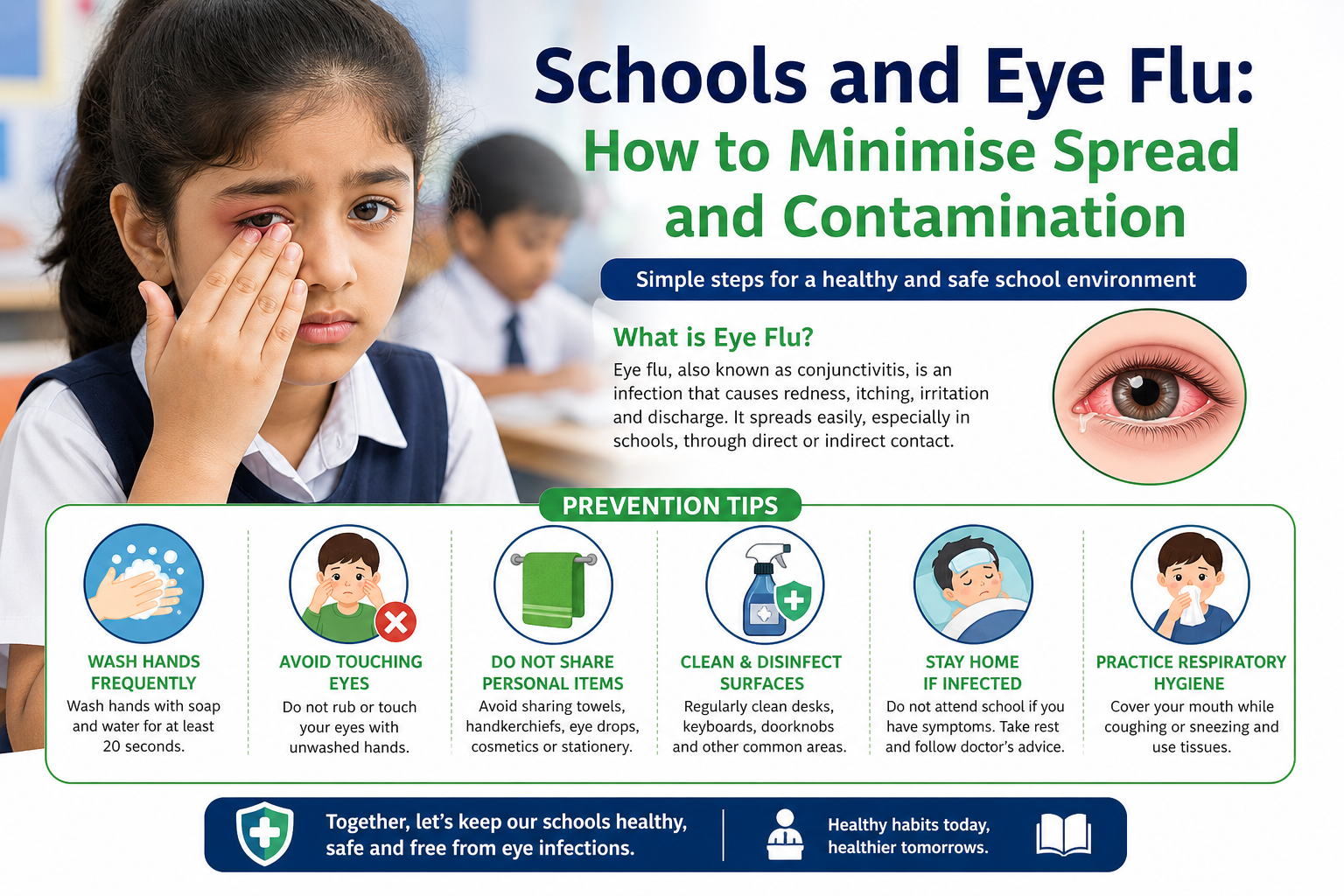
Eye flu, commonly known as conjunctivitis or “pink eye,” is a highly contagious infection that spreads rapidly—especially in schools where children interact closely. Classrooms, shared materials, and group activities create the perfect environment for infections to spread if preventive measures are not taken seriously.
With rising cases in many regions, it is essential for schools, parents, and students to understand how eye flu spreads and what steps can effectively reduce contamination.
What is Eye Flu?
Eye flu refers to inflammation of the conjunctiva—the thin membrane covering the white part of the eye. It can be caused by viruses, bacteria, or allergens. Viral and bacterial conjunctivitis are the most contagious forms and can spread quickly among school children.
Common symptoms include:
- Redness in the eyes
- Itching or irritation
- Watery or sticky discharge
- Swollen eyelids
- Sensitivity to light
Because symptoms are visible and uncomfortable, early detection plays a key role in preventing outbreaks in schools.
Why Schools Are High-Risk Areas
Schools are particularly vulnerable to eye flu outbreaks due to:
- Close contact among students
- Shared objects like books, desks, and stationery
- Poor hygiene habits in younger children
- Crowded classrooms and limited ventilation
Eye flu spreads through direct contact (touching infected eyes), indirect contact (sharing towels or surfaces), and even respiratory droplets from coughing or sneezing.
This makes schools a hotspot for rapid transmission if precautions are not followed.
How Eye Flu Spreads in Schools
Understanding transmission helps in prevention. Eye flu can spread through:
1. Direct Contact
Touching an infected person’s eyes or face and then touching your own eyes can spread the infection quickly.
2. Contaminated Surfaces
Desks, doorknobs, and shared supplies can carry infectious particles.
3. Shared Personal Items
Items like handkerchiefs, towels, makeup, or eye drops can transmit infection easily.
4. Poor Hygiene Practices
Not washing hands or frequently touching the face increases risk significantly.
Effective Ways to Minimise Spread in Schools
Preventing eye flu requires a combination of hygiene, awareness, and discipline. Here are the most effective strategies:
1. Promote Hand Hygiene
Frequent handwashing is the most important preventive measure. Students should wash hands with soap for at least 20 seconds, especially before touching their face or eyes.
Schools can:
- Install hand sanitiser stations
- Encourage handwashing before meals and after activities
- Educate children through posters and demonstrations
2. Avoid Touching Eyes
Students should be taught not to rub or touch their eyes, as this transfers germs directly.
Simple habits like using clean tissues instead of hands can make a big difference.
3. Do Not Share Personal Items
Sharing items is one of the fastest ways infections spread.
Students must avoid sharing:
- Towels and napkins
- Eye drops or cosmetics
- Pillows or handkerchiefs
This simple rule significantly reduces contamination risks.
4. Clean and Disinfect Surfaces
Frequently touched surfaces should be cleaned regularly, including:
- Desks and chairs
- Door handles
- Computer keyboards
- Sports equipment
Disinfection helps eliminate viruses present on surfaces and prevents indirect transmission.
5. Isolate Infected Students
If a student shows symptoms of eye flu, they should stay at home until recovery. Sending infected children to school increases the risk of outbreaks.
Teachers and parents should work together to identify symptoms early and act responsibly.
6. Encourage Respiratory Hygiene
Since eye flu can spread through droplets, students should:
- Cover their mouth while coughing or sneezing
- Use tissues and dispose of them properly
- Wash hands immediately after
7. Maintain Clean Personal Hygiene
Students should:
- Use clean towels daily
- Wash pillowcases frequently
- Keep their face and eyes clean
Clean personal habits reduce the chances of reinfection and spread.
8. Improve Classroom Ventilation
Good airflow reduces the concentration of airborne germs. Schools should:
- Open windows when possible
- Avoid overcrowding
- Ensure proper ventilation systems
Role of Teachers and School Authorities
Teachers play a vital role in controlling the spread of eye flu. They can:
- Monitor students for symptoms
- Encourage hygiene practices
- Inform parents about outbreaks
- Ensure regular cleaning of classrooms
Schools can also organise awareness sessions to educate students about infection control.
Role of Parents
Parents must support prevention efforts by:
- Keeping infected children at home
- Teaching proper hygiene habits
- Providing personal hygiene items
- Consulting a doctor if symptoms worsen
Early care and responsible behaviour at home help protect the entire school community.
When to Seek Medical Help
While most cases of eye flu resolve within 1–2 weeks, medical attention is necessary if:
- Symptoms worsen
- Vision becomes blurry
- Pain increases
- Infection does not improve
Timely treatment prevents complications and reduces spread.
Conclusion
Eye flu can spread rapidly in schools, but with proper hygiene practices and awareness, outbreaks can be controlled effectively. Simple steps like handwashing, avoiding shared items, and isolating infected individuals can make a significant difference.
Schools, parents, and students must work together to create a safe and healthy environment. Prevention is always better than cure—especially when it comes to contagious infections like eye flu.