





























Cancer treatment is entering a new era in 2026, thanks to a groundbreaking discovery by scientists at KAIST (Korea Advanced Institute of Science and Technology). This new cancer injection therapy directly targets tumors and activates the body’s immune system to destroy cancer cells from within.
Unlike traditional treatments such as chemotherapy or radiation, this method is more precise, less invasive, and potentially more effective for solid tumors.
What Is the KAIST Cancer Injection Therapy?
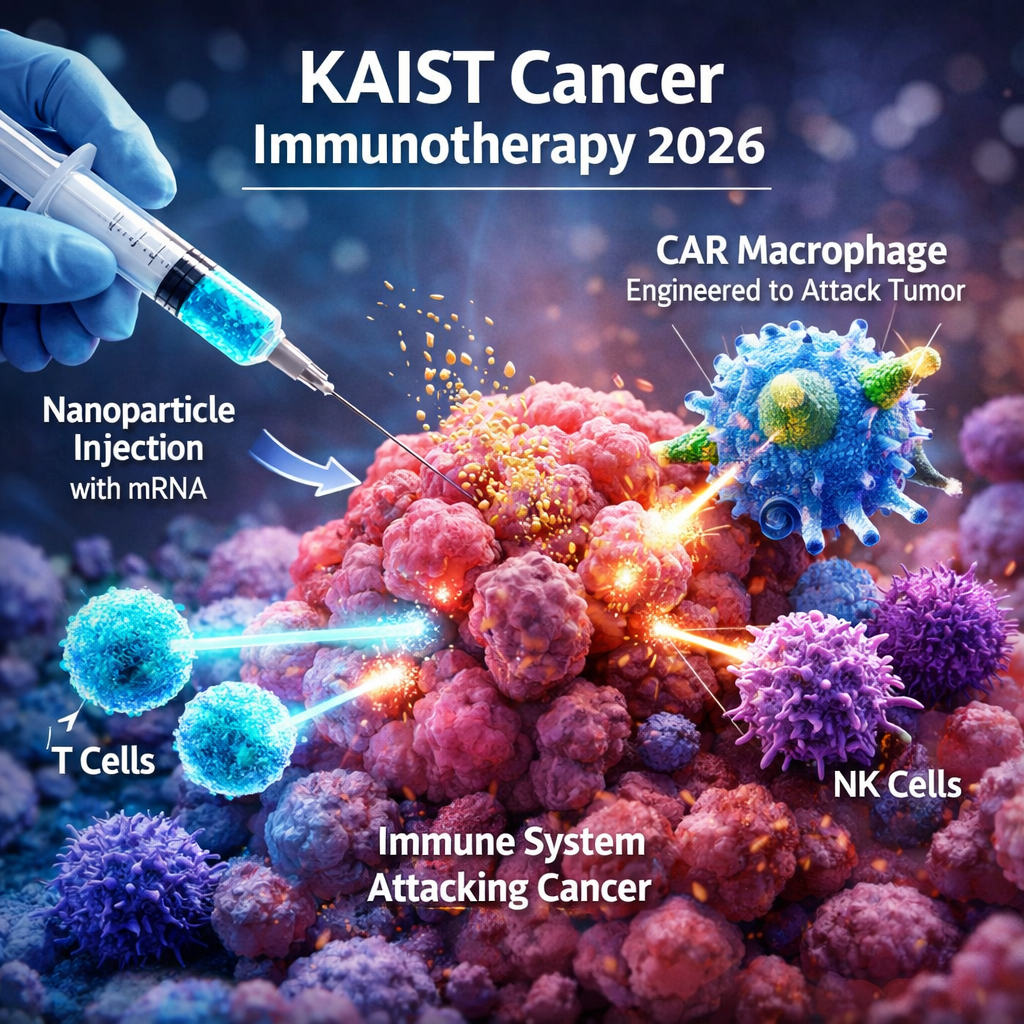
The KAIST research team has developed an innovative tumor injection that uses nanoparticles and mRNA technology to reprogram immune cells already present inside tumors.
This means the therapy works inside the body without removing or modifying cells in a lab, making it faster and more accessible than many current immunotherapies.
How the Treatment Works
The process is simple but powerful:
Step-by-Step Mechanism:
- The injection is delivered directly into the tumor
- Nanoparticles carry mRNA into immune cells (macrophages)
- These cells are reprogrammed into cancer-fighting CAR macrophages
- The activated cells attack tumor cells immediately
- The immune system is triggered for a wider anti-cancer response
This approach transforms inactive immune cells into active defenders against cancer.
Why This Breakthrough Matters
Key Advantages:
- ✔ No need for complex lab-based cell therapy
- ✔ Faster and more scalable treatment
- ✔ Targets tumors directly
- ✔ Lower risk of systemic side effects
- ✔ Boosts natural immune response
This could make advanced cancer treatment more affordable and widely available.
Results from Early Research
In early-stage studies, the therapy has shown promising outcomes:
- Tumor growth significantly reduced
- Strong immune activation observed
- Potential long-term protection against cancer recurrence
Although these results are based on preclinical trials, they highlight the enormous potential of this technology.
How It Compares to Traditional Cancer Treatments
| Treatment Type | Limitations | KAIST Injection Advantage |
|---|---|---|
| Chemotherapy | Damages healthy cells | Targets only tumor area |
| Radiation | Limited precision | Activates immune system |
| CAR-T Therapy | Expensive & complex | No cell extraction needed |
Future of Cancer Treatment
This innovation may pave the way for:
- Personalized cancer immunotherapy
- Combination with cancer vaccines
- AI-guided targeted treatments
- Less toxic alternatives to chemotherapy
KAIST researchers are already exploring ways to expand this technology for multiple cancer types.
Challenges and Clinical Trials
Despite its promise, the therapy still faces important challenges:
- Human clinical trials are required
- Long-term safety must be confirmed
- Treatment scalability needs validation
Experts believe it may take a few years before this becomes widely available.
Conclusion
The KAIST cancer injection breakthrough in 2026 represents a major leap forward in immunotherapy. By activating the body’s own immune system directly inside tumors, this treatment could transform how cancer is treated in the future.
While more research is needed, this discovery offers real hope for safer, more effective cancer therapies worldwide.