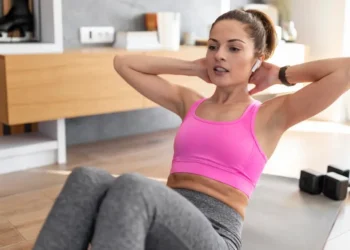
















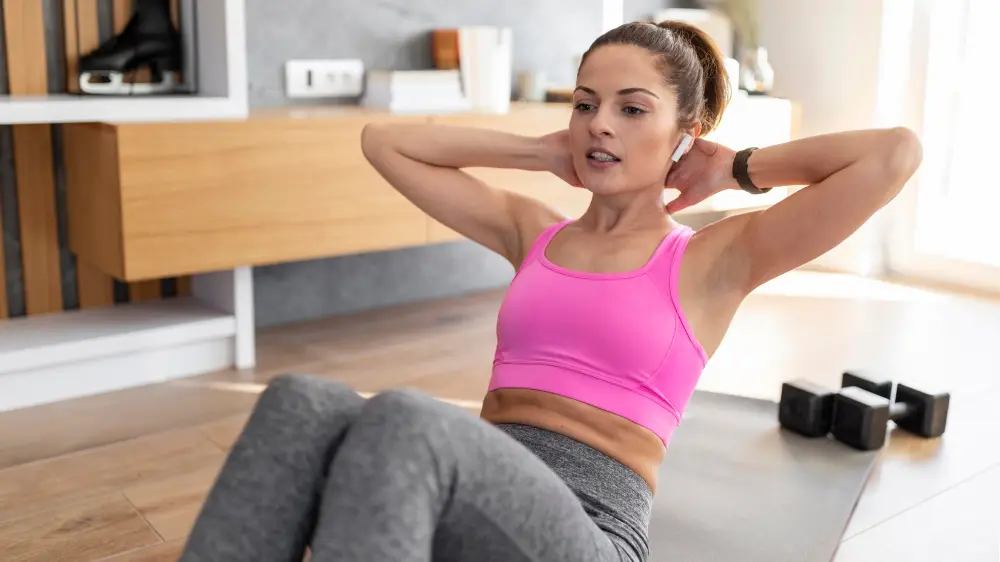
A good female chest workout at home without equipment uses push-up variations you can scale to your level: wall push-ups, incline push-ups on a counter or chair, knee push-ups and full push-ups. Add an isometric palm press and a few shoulder and upper-back moves, train two or three times a week, and you will build a stronger chest, shoulders and arms. You do not need weights, and you will not “bulk up” by accident.
This guide explains what chest training can and cannot do for women, the best no-equipment exercises from beginner to advanced, and a simple routine to follow. For more chest exercise ideas, see our main guide to no-equipment chest workouts at home.
Why Women Should Train the Chest
Chest muscles (the pectorals) help you push, lift and carry, from pushing a pram or shopping trolley to lifting a child or a suitcase into the car. Strengthening them alongside your shoulders and upper back supports balanced upper-body strength.
Muscle-strengthening exercise is also recommended for everyone. The NHS advises adults to do strengthening activities that work all the major muscle groups, including the chest, on at least two days a week.
Will Chest Exercises Change Breast Size?
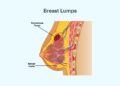
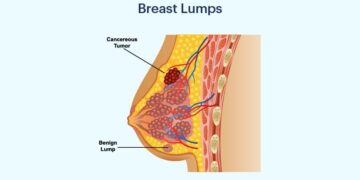
This is one of the most common questions. MedlinePlus explains that breasts are made of connective tissue, glands and ducts, and that fat makes up most of the breast tissue. The breasts sit in front of the pectoral (chest) muscles.
Because breasts do not contain the chest muscle, push-ups and other chest exercises strengthen the muscle underneath but do not directly change breast tissue. Any change in breast size during a fitness journey is more likely to reflect changes in overall body fat. In short, chest training will make you stronger; it will not shrink or enlarge your breasts in a targeted way.
Comfort tip: a well-fitting, supportive sports bra can make push-ups, jumping and other movements more comfortable.
Best Chest Exercises for Women at Home (No Equipment)
The exercises below are listed from easiest to hardest. Start at the level where you can do 8–12 controlled reps, then move up when that feels easy.
1. Wall push-up
Stand an arm’s length from a wall, hands on the wall at chest height and slightly wider than your shoulders. Bend your elbows to bring your chest towards the wall, then push back. This is ideal for complete beginners, older adults, or anyone returning to exercise.
2. Incline push-up
Place your hands on a kitchen counter, sturdy table or the seat of a stable chair, with your body in a straight line from head to heels. The lower the surface, the harder it gets, so you can progress gradually.
3. Knee push-up
From a high plank position, lower your knees to the floor (use a folded towel for comfort). Keep a straight line from your head to your knees and lower your chest towards the floor. Biomechanics research shows push-ups from the knees put less load on the arms than standard push-ups, which makes them a good stepping stone.
4. Full push-up
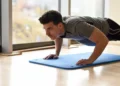
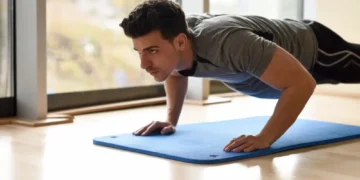
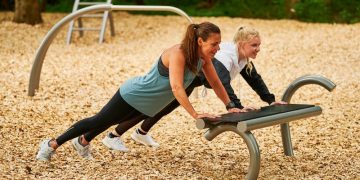
Hands slightly wider than shoulder-width, body straight, core tight. Lower until your chest is just above the floor, with elbows at about 45 degrees to your body, then press back up. Quality matters more than quantity.
5. Decline push-up (advanced)
Raise your feet on a step or chair. This targets the upper chest and front shoulders and is harder than a standard push-up. See our step-by-step guide to the upper chest workout at home.
6. Isometric palm press
Press your palms together in front of your chest with elbows out, squeezing as hard as is comfortable for 10–20 seconds while breathing normally. It is low-impact and useful for all levels.
7. Superman (to balance the front)
Training the back alongside the chest supports good posture. Lie face down with arms stretched in front, then lift your arms and legs a few inches off the floor, hold for 2–3 seconds and lower slowly. Healthline suggests 2–3 sets of 8–12 reps and advises skipping it if you have a back injury, unless a professional approves it. It is also not recommended after the first trimester of pregnancy.
20-Minute Female Chest Workout (No Equipment)
Warm up for 5 minutes with arm circles, shoulder rolls and marching on the spot. Rest 60 seconds between sets. Pick the push-up version that matches your level.
| Exercise | Beginner | Intermediate | Advanced |
|---|---|---|---|
| Push-up | Wall or incline: 3 × 10–12 | Knee: 3 × 8–12 | Full: 3 × 8–15 |
| Second push-up variation | Incline (lower surface): 2 × 8 | Incline or full: 2 × 6–10 | Decline: 3 × 6–12 |
| Isometric palm press | 3 × 10 seconds | 3 × 15 seconds | 3 × 20 seconds |
| Superman | 2 × 8 | 2 × 10 | 3 × 12 |
Finish with a gentle chest stretch: stand in a doorway, place your forearms on the frame and lean forward slightly until you feel a stretch across your chest. Hold for about 20–30 seconds.
How Often Should Women Do Chest Workouts?
The American College of Sports Medicine (ACSM) recommends training each major muscle group two or three days a week, with at least 48 hours between resistance sessions, and 2–4 sets of 8–12 reps to build strength. For beginners, two sessions a week is a good start. You can train chest on the same day as other muscle groups, such as legs and back.
Tips for Better Results
- Progress gradually: add reps, slow down the lowering phase, or move to a harder push-up version.
- Keep good form: straight body, tight core, elbows at about 45 degrees.
- Train the whole body: balance chest work with back, legs and core.
- Eat well: enough protein and overall nutrition support muscle repair. Read why a balanced diet matters.
- Listen to your body: stop if you feel pain in your wrists, shoulders or elbows.
Safety Notes
Check with a doctor or physiotherapist before starting if you have a shoulder, wrist or back injury, a long-term health condition, or are pregnant or have recently given birth. After pregnancy, especially if you have abdominal separation (diastasis recti), ask a professional which exercises are suitable.
The Bottom Line
Women can build a strong chest at home with no equipment by working through push-up progressions from the wall to the floor and beyond. Chest exercises strengthen the muscle beneath the breasts but do not directly change breast size. Train two or three times a week, keep good form, and make each workout a little harder over time.
Frequently Asked Questions
Do push-ups make your breasts smaller?
No. Breasts are mostly fat and glandular tissue and sit in front of the chest muscles. Push-ups strengthen the muscle underneath; any change in breast size is more likely linked to overall changes in body fat.
Can women build chest muscle without weights?
Yes. Push-up variations, especially when made gradually harder, can build chest strength and muscle at home.
What if I cannot do a single push-up?
Start with wall push-ups, then move to incline push-ups on a counter, then knee push-ups. Most people can progress to full push-ups with regular practice.
How long until I see results?
Many beginners notice they can do more reps within a few weeks. Visible muscle changes usually take longer and depend on consistency, nutrition and sleep.
Is it safe to do chest workouts every day?
It is better to rest at least 48 hours between hard sessions for the same muscles, as recommended by the ACSM, so they can recover and get stronger.
Sources
- MedlinePlus: Breast anatomy
- NHS: Physical activity guidelines for adults aged 19 to 64
- Medical News Today: ACSM issues new recommendations on quantity and quality of exercise (2011)
- Healthline: Superman Exercise
- Wurm B, Ebben W, et al. Kinetic analysis of several variations of push-ups. ISBS Conference Proceedings, 2010
This article is for general information only. Speak to a doctor or physiotherapist before starting a new exercise programme if you have an injury or health condition.